
A procurement manager in Munich needs a supplier. Five years ago she would have typed a query into Google and worked through two pages of results. Today she asks an AI assistant — "who are the reliable manufacturers of X, and how do they compare?" — and gets a single, confident answer with three names in it.
If your company is one of those three names, you just entered a shortlist without paying for a click. If it isn't, you were invisible in a purchase decision you never knew happened. That, in one scene, is why GEO exists.
Two different games on two different boards
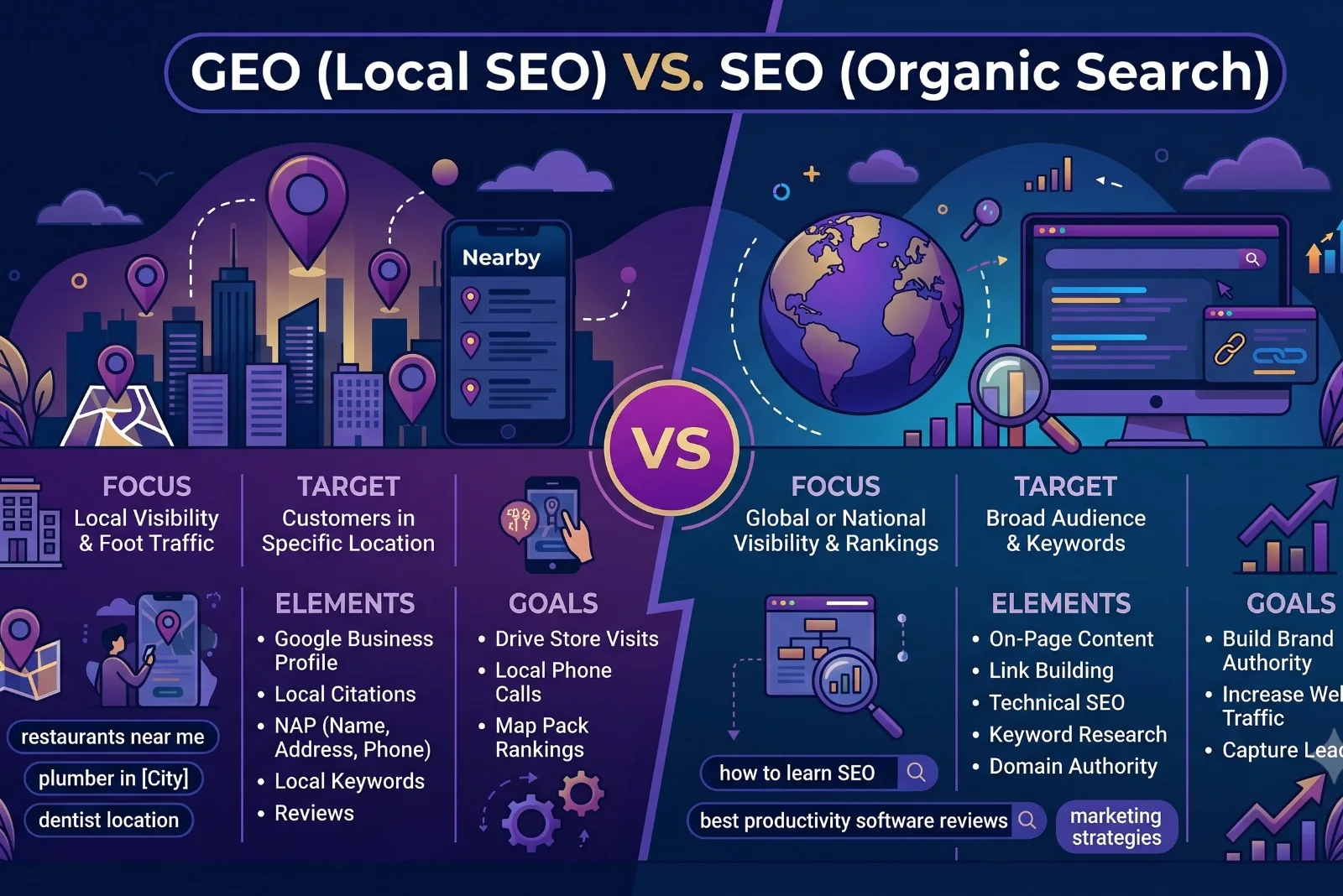
SEO — search engine optimization — is the discipline you know: earning position in a ranked list of links on Google or Baidu. The user sees ten options and chooses. Your job is to be near the top, with a title worth clicking.
GEO — generative engine optimization — is about being inside the answer itself when someone asks ChatGPT, Perplexity, Gemini, or an AI overview. There is no list of ten. There's one synthesized response, and either you're cited in it or you don't exist.
Why the tactics diverge
Rankings respond to links, technical health, and keyword-matched content. AI answers respond to something subtler: whether the model can understand and trust who you are. That shifts the work toward:
- Entity clarity — your company described consistently everywhere it appears: same name, same facts, same story. Contradictions make models hedge, and hedging models leave you out.
- Structured data — schema markup that tells machines, unambiguously, what you make, where you are, and who vouches for you.
- Citable content — plain, factual, quotable claims. Models cite sentences that sound like answers, not slogans.
- Third-party corroboration — industry directories, press, reviews. A model trusts what multiple sources agree on.
You still need both
None of this retires SEO. Search engines still drive most B2B research traffic, and — crucially — AI models learn from the same web that search engines index. Strong SEO is the foundation GEO stands on: a fast, crawlable, well-structured site full of clear content feeds both machines. The mistake is treating them as the same discipline with the same checklist. They're siblings, not twins.
Where to start
Ask an AI assistant the question your buyer would ask — in English and in Chinese. Read what comes back. If you're absent, misdescribed, or filed under "budget options," that's your gap analysis, free of charge. Fixing it is engineering: entity work, structured data, citable content, and patience while the models re-learn who you are.
It's the kind of work we do daily — and if you'd like that gap analysis done properly, we'll show you exactly where you stand.